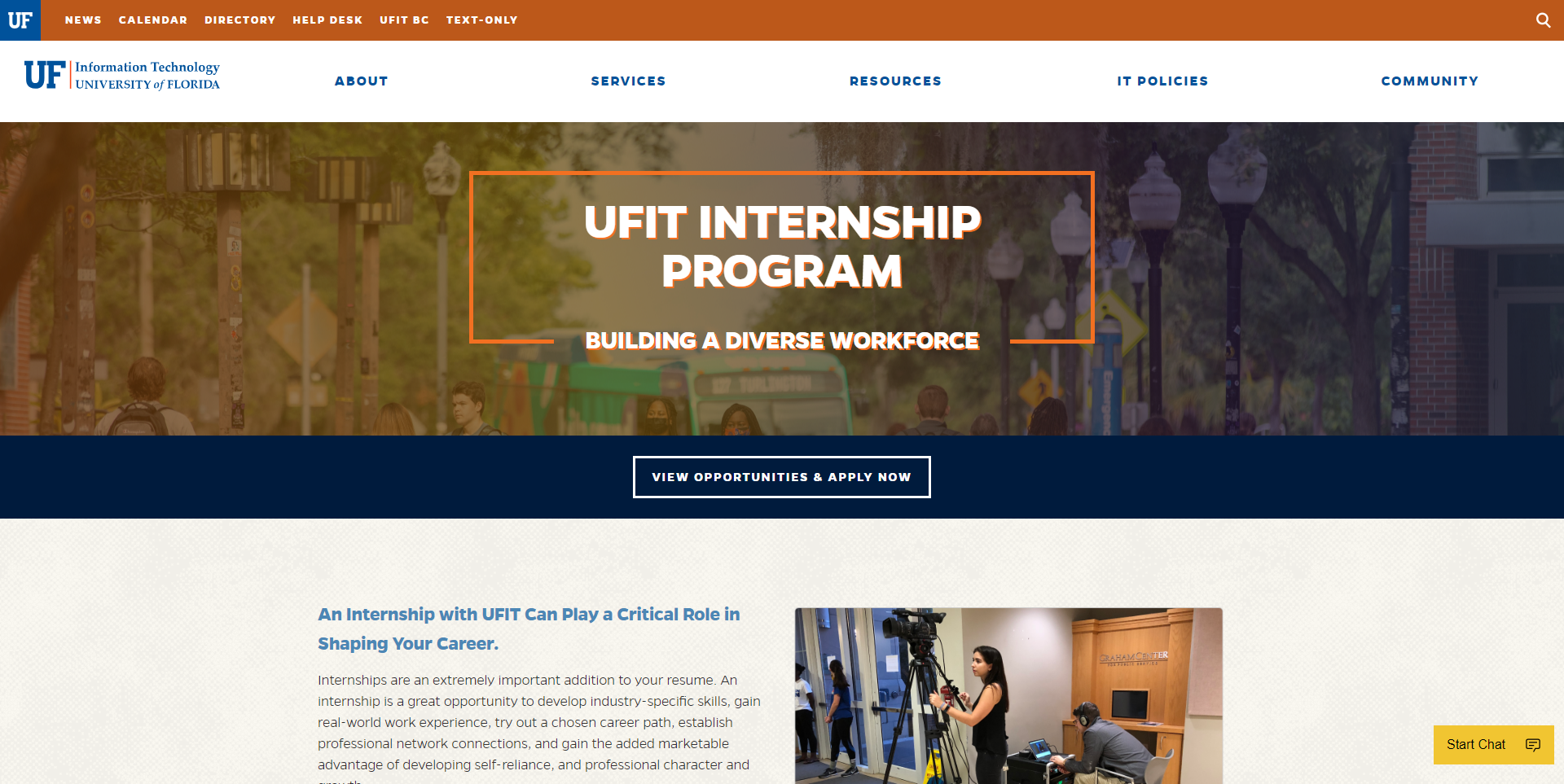
The UFIT internship program landing page
My initial task involved crafting a dedicated landing page for the internship program. With specific information requirements to address, I designed custom components tailored to the project's needs. This involved the creation of two distinct card types: one to spotlight the variety of IT internship areas available and another to present application deadlines for each term. Additionally, I designed a new content type for a testimonial section, showcasing feedback from previous program participants to enhance the page's impact.
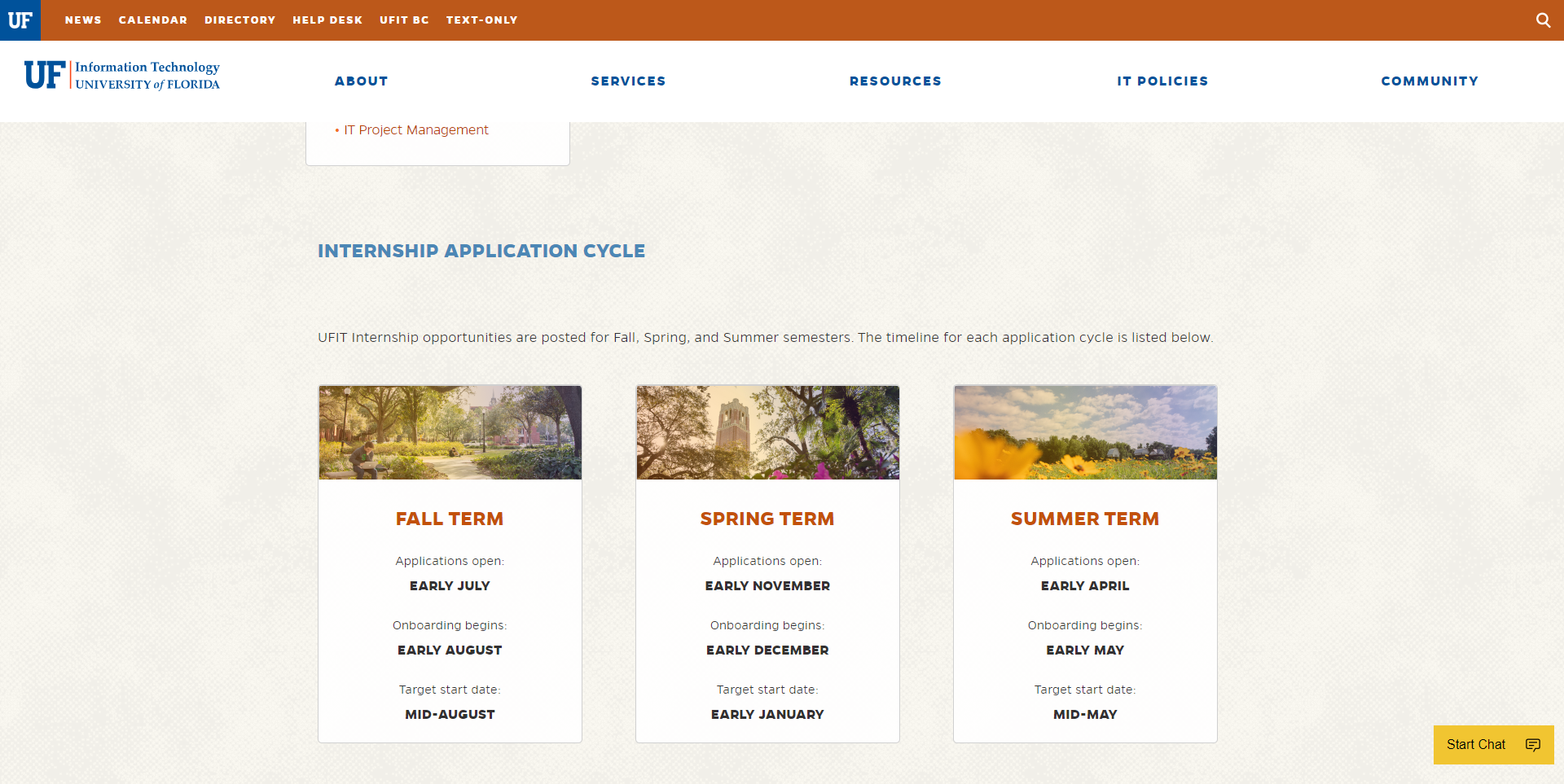
The custom content type for the application cycle cards
When working with interns, I was tasked with creating a part of their program to help them improve their skills in both accessibility and either web design or development. Since we had applicants interested in either area, I developed two separate tracks for our interns: one for developers focusing on accessibility and one for designers. I created Notion pages for each track to help the interns stay on target and give them further explanation of each step.
Each track adheres to a structured timeline. With four weeks dedicated to my part of the internship, we kick off week one with interns delving into and taking notes on the POUR Principles of accessibility. Beyond that point, the paths diverge. Developers are equipped with a Figma design file that they must independently code. Designers, on the other hand, are tasked with creating either an app or website that serves as an accessibility checklist during their product design process. I also created a website in Figma with an abundance of accessibility violations to give the designers a chance to practice auditing a design.
After week one's exploration of the POUR Principles, interns are challenged to integrate this knowledge into their respective projects. As our four-week journey draws to a close, they showcase their creations, providing an opportunity to discuss potential improvements in their code or designs. Finally, at the conclusion of the internship, they present once more, highlighting any refinements made to their products and sharing valuable insights gleaned from the entire experience
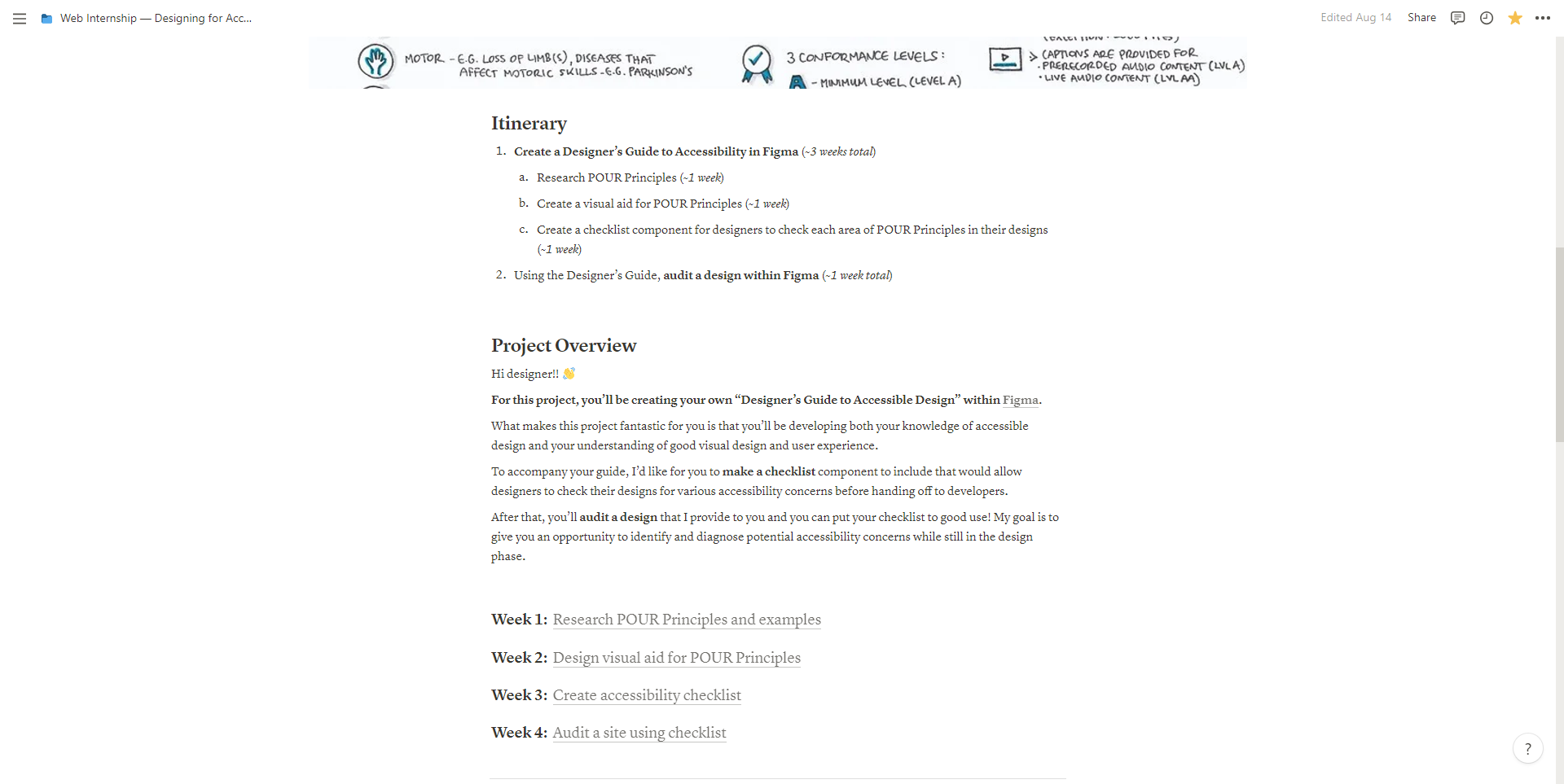
A screenshot of the page created on Notion for the designer track
With each batch of interns, my primary aim is for them to depart with three things: a concrete portfolio piece, confidence in their technical skills, and enthusiasm for the field they've chosen to pursue. It was particularly vital for me to demonstrate the collaboration process for developers, many of whom had not previously worked alongside designers or worked on coding a project using design from a Figma file. Most recently, we used some of our time together to go over the new plugin for Figma and VS Code as well as using the dev mode feature.
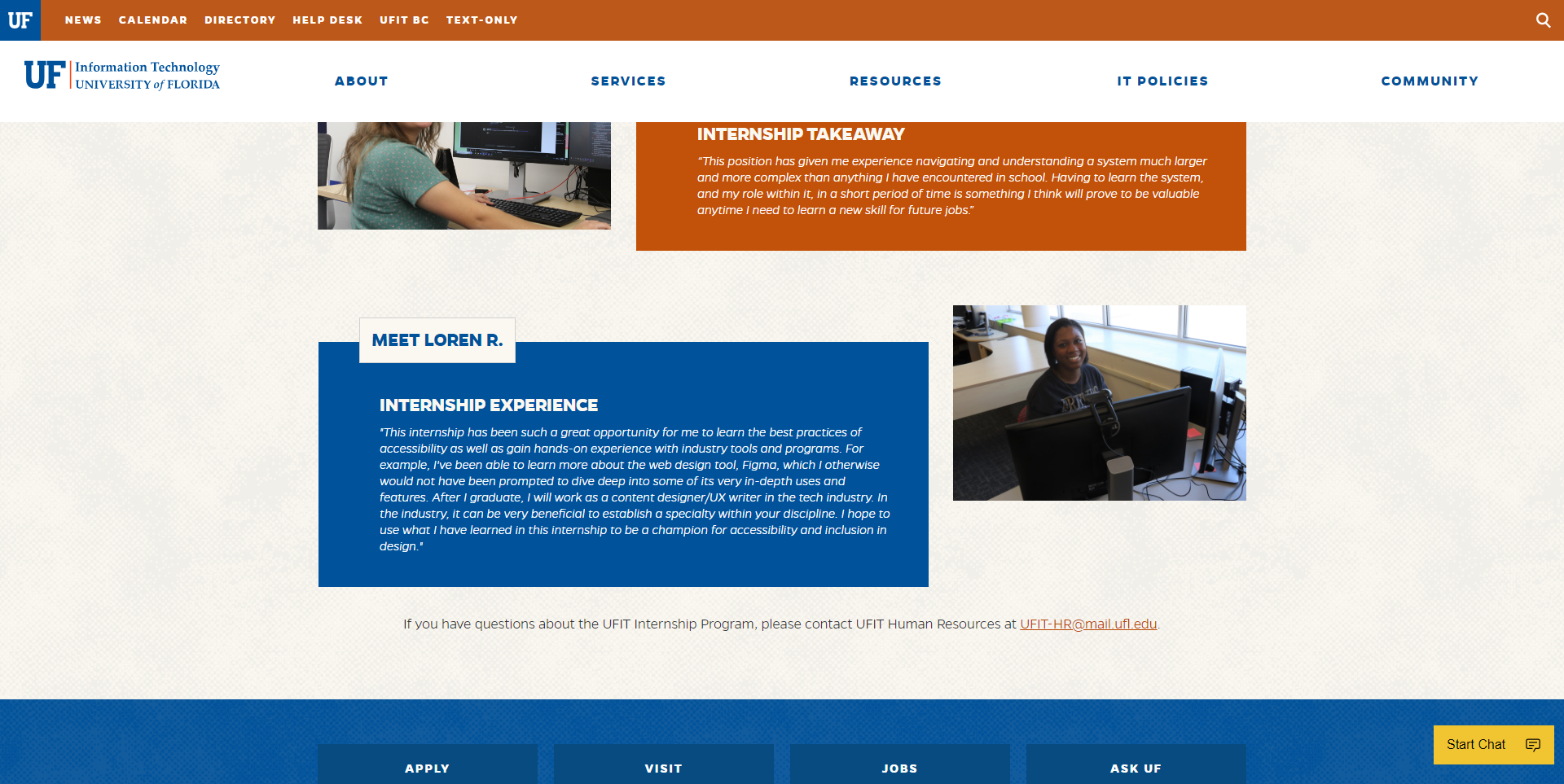
A testimonial from a previous intern
For our designers, we delve into crucial Figma-related topics. I emphasize the significance of best practices in file organization, component creation, auto-layout, and employing accessibility-checking plugins in their designs within Figma. Here is a quote from a past internship participant who received a job at Uber after graduating:
"This internship has been such a great opportunity for me to learn the best practices of accessibility as well as gain hands-on experience with industry tools and programs. For example, I've been able to learn more about the web design tool, Figma, which I otherwise would not have been prompted to dive deep into some of its very in-depth uses and features. After I graduate, I will work as a content designer/UX writer in the tech industry. In the industry, it can be very beneficial to establish a specialty within your discipline. I hope to use what I have learned in this internship to be a champion for accessibility and inclusion in design."